


DETECT Research Study
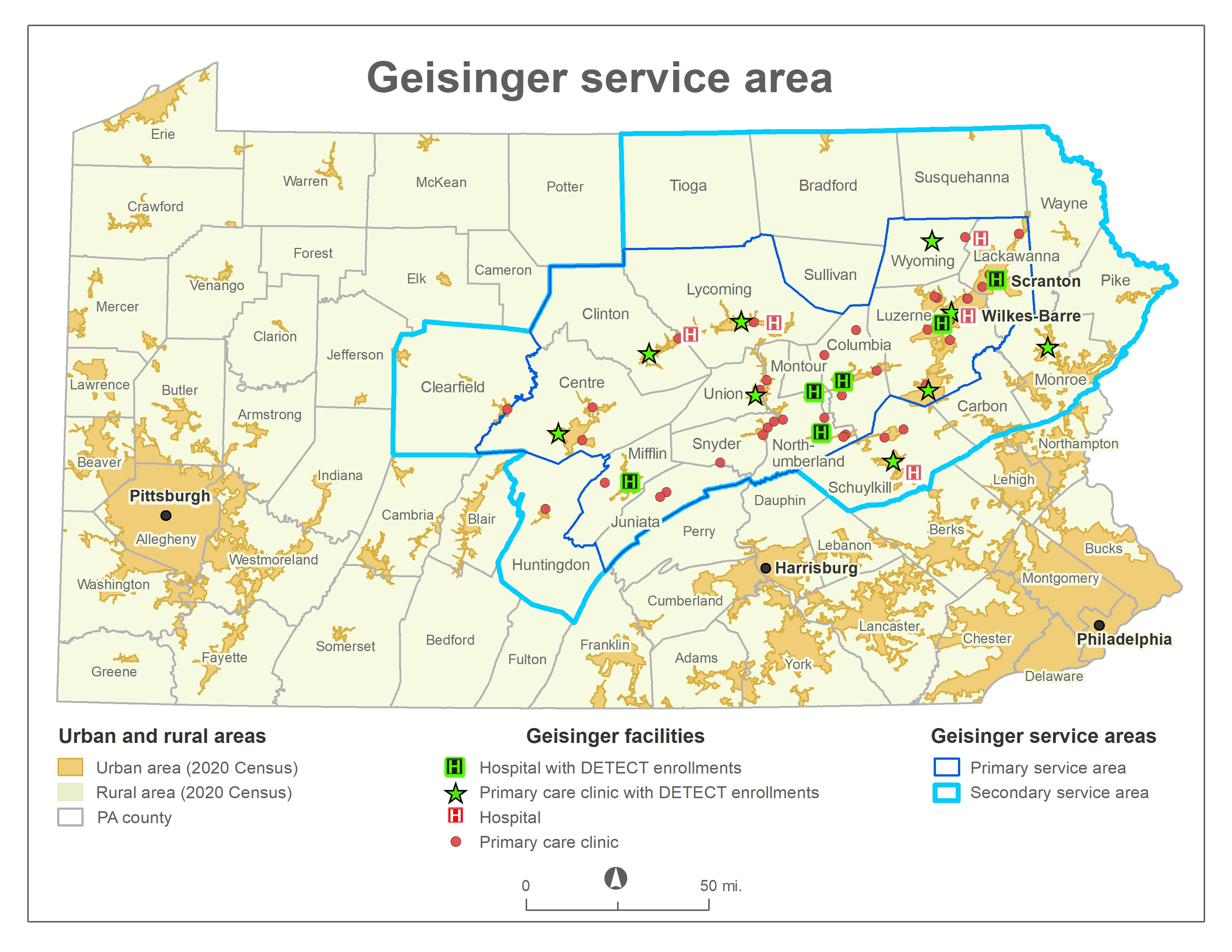
Detecting Cancers Earlier Through Elective Mutation-Based Blood Collection and Testing (DETECT) is a research study that is trying to understand how well a blood test works for finding cancer. DETECT uses a research marker panel blood test to look for tumor DNA by checking for 15 genes and looking for abnormally high levels of 10 protein markers. The study enrolled 10,0006 participants in 15 locations:
- Geisinger Bloomsburg Hospital, Professional Building
- Geisinger Medical Center (Danville, PA)
- Geisinger Precision Health Clinic (Forty-Fort, PA)
- Geisinger Grays Woods (Port Matilda, PA)
- Geisinger Mount Pocono
- Geisinger Lewistown
- Geisinger Tunkhannock
- Miller Center (Lewisburg, PA)
- Geisinger Hazleton
- Tiadaghton Health Center (Lock Haven, PA)
- Geisinger South Williamsport
- Geisinger Pottsville
- Geisinger South Wilkes Barre
- Geisinger Shamokin Hospital
- Scranton, PA


What was the study looking for in my blood?
DETECT was looking at circulating tumor DNA and protein markers. Normal cells in your body shed DNA into your bloodstream when they die. Sometimes, cancer cells shed DNA into the bloodstream, too. This is called circulating tumor DNA (ctDNA). We were looking at about 15 genes that may be found in the blood when cancer cells shed DNA. Some cancers might also cause levels of certain proteins in the blood to rise above normal. We were measuring about 10 protein markers that are in the blood.

Study Updates
In August 2021, we offered some additional testing to the 10,006 DETECT participants. The additional testing included an informed consent, two additional follow-up surveys (in years 3 and 4), and a blood sample. A total of 3,870 participants at 16 locations enrolled. The information learned from this additional testing may be used to improve the cancer screening blood test in the future but did not generate any additional results for participants.
Exact Sciences Corporation is the project sponsor. The original testing lab, Thrive Earlier Detection, merged with and is now part of Exact Sciences. Exact Sciences is developing the Cancerguard™ test to detect multiple cancers from a single blood draw.

Study Timeline
All Year 5 (end-of-study) surveys have been completed.
A message from Adam H. Buchanan, MS, MPH, CGC, principal investigator:
“As the DETECT study nears its end, I would like to offer my heartfelt thanks. You helped us do something special. DETECT is the first study — ever — to return results of a multi-cancer blood test to participants. Because of your involvement in DETECT, we have learned a tremendous amount about how well the test works and how to make it better. These lessons will lead to more people being diagnosed with cancer early, when it can be cured. Cancer researchers across the world know the DETECT study well and have been cited in more than 500 scientific papers. We are so grateful that you contributed to this important work.”
For more information about the study, call our DETECT study team at 570-387-2154. You can also call Ashley Honushefsky, DETECT project manager, at 570-387-2153, or Zack Salvati, genetic counselor, at 814-231-6258.
Learn more
- Outcomes in participants with a false positive multi-cancer early detection (MCED) test (Journal of Clinical Oncology)
- Long-term clinical outcomes of cancers diagnosed following detection by a blood-based multi-cancer early detection (MCED) test (Journal of Clinical Oncology)
- Cancer could soon be detected by blood tests, even before symptoms (Washington Post)
Manuscripts
- Honushefsky, Ashley, Wagner, Eric S., Sheridan, Kathleen, Spickard, Kathleen M., LeMasters, William R., Walter, Carroll N., Beaver, Taryn, Lennon, Anne Marie, Papadopoulos, Nickolas, Rahm, Alanna Kulchak, Buchanan, Adam H. 2024/03/13. Real-time evaluation and adaptation to facilitate rapid recruitment in a large, prospective cohort study - BMC Health Services Research - 336-24-1- 1472-6963, https://doi.org/10.1186/s12913-024-10750-5
- Buchanan AH, Lennon AM, Choudhry OA, Elias PZ, Rego SP, Sadler JR, Roberta J, Zhang Y, Flake D, Salvati ZM, Wagner ES, Fishman EK, Papadopoulos N, Beer TM. Multi-year clinical outcomes of cancers diagnosed following detection by a blood-based multi-cancer early detection (MCED) test - Cancer Prevention Research - 2024 Aug 1;17(8):349-353, https://pubmed.ncbi.nlm.nih.gov/38819783/
- Choudhry OA, Kharge AB, Rego SP, Elias PZ, Buchanan AH, Lennon AM, Papadopoulos N, Diehl F, Beer TM. Pre-malignant conditions diagnosed following a positive cancer signal from a multi-cancer early detection test - Frontiers in Oncology - 2024 Oct 25;14:1461693, https://pubmed.ncbi.nlm.nih.gov/39512764/
- Lennon AM, Buchanan AH, Rego SP, Choudhry OA, Elias PZ, Sadler JR, Roberta J, Zhang Y, Flake DD 2nd, Honushefsky A, Salvati ZM, Sheridan K, Wagner ES, Fishman EK, Papadopoulos N, Beer TM. Outcomes Following a False-Positive Multi-Cancer Early Detection Test: Results from DETECT-A, the First Large, Prospective, Interventional MCED Study - Cancer Prevention Research - 2024 Jun 10:OF1-OF5. Epub ahead of print. https://pubmed.ncbi.nlm.nih.gov/38853442/
Abstracts
- Omair A. Choudhry, Angana Kharge, Seema P. Rego, Paul Z. Elias, Adam H. Buchanan, Anne Marie Lennon, Nickolas Papadopoulos, Frank Diehl, Tomasz M. Beer. Case report: DETECT-A participants with pre-malignant conditions [abstract]. In: Proceedings of the American Association for Cancer Research Annual Meeting 2024; Part 1 (Regular Abstracts); 2024 Apr 5-10; San Diego, CA. Philadelphia (PA): AACR; Cancer Res 2024;84(6_Suppl):Abstract nr 2449.
- Adam H. Buchanan, Anne Marie Lennon, Paul Z. Elias, Amy M. Lehman, Yongqiang Zhang, Darl D. Flake, Eric S. Wagner, Seema P. Rego, Omair A. Choudhry, Nickolas Papadopoulos, Tomasz M. Beer; Abstract A064: Lung cancer screening adherence among participants in DETECT-A, the first prospective interventional trial of a multi-cancer early detection (MCED) blood test. Clin Cancer Res 1 November 2024; 30 (21_Supplement): A064. https://doi.org/10.1158/1557-3265.LIQBIOP24-A064.
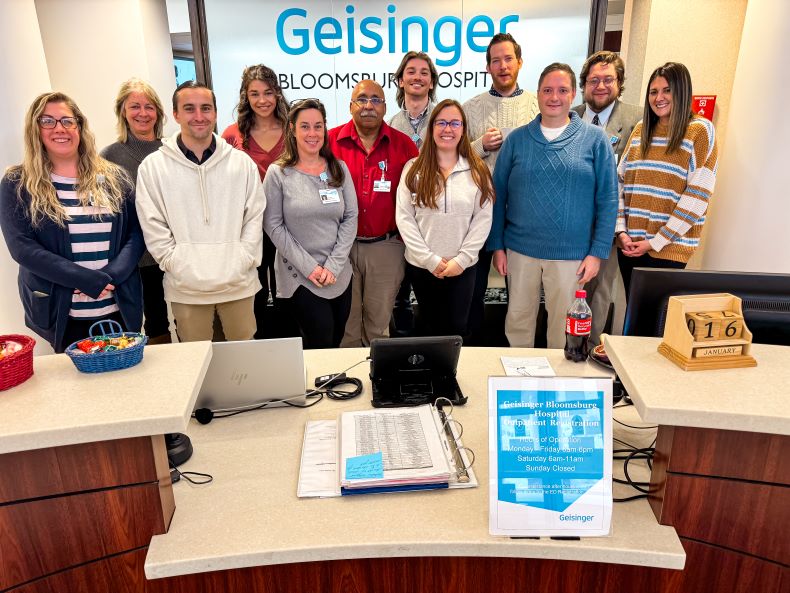
Ashley: My favorite part of the DETECT study was our participants. Their generosity, engagement and commitment to the study have been truly remarkable. We are thankful for each of them for their participation in the study over the past 5 years. Their involvement has not only made our work enjoyable but has also had a meaningful contribution to cancer screening research.
Kathy: Our high-enrollment days when we traveled to Gray’s Woods were long days, but our whole team worked well together, the research participants were fun to talk to, and the long ride back was good decompression time.
Carroll: The thing that I am most proud of with DETECT are all the publications that came out of it. Or perhaps the multidisciplinary teamwork that allowed those who needed it to get care.
Eric: Completing the final Year 5 survey was a big milestone, as it was something that every person on the team contributed to in some way.
Mackenzie: Being able to successfully enroll 10,000 participants in such a short period of time was an incredible accomplishment. The study team worked very hard over the last 5 years to consent the participants, do their blood draws and complete all their surveys. My favorite part about DETECT was definitely going on visits and getting to meet our participants from all over the area. Many participants told us stories about their families, travels and life experiences. It was neat to get to know them on a more personal level.
Michael: Being able to be a part of the final study closeout was a big milestone. The last couple of months where the number of surveys kept getting smaller and we started doing closeouts in Epic marked the end of a big study.
Victoria: Being a part of the DETECT study was so rewarding. Our countless hours of seeing our participants in various locations and phone call surveys make the end of this study bittersweet. For me, meeting our selfless participants and hearing their stories made this study gratifying. The DETECT participants have made a positive lasting impression on me and have helped fuel my love for research over the years.
Katie: I've been working on this study since the beginning, and it's been incredible to watch our team grow and see how many people in our community care about cancer research. My favorite thing about DETECT has been connecting with our participants and having positive impacts in their lives, both big and small. DETECT might be coming to an end, but we'll continue trying to make progress with early cancer detection. Onward!
Jerrold: In doing surveys over the phone and contacting participants to complete their medical records, I spoke to many people and heard their stories, both positive and negative experiences. Talking to these folks and hearing their stories gave me different perspectives on life and people, some of which I will never forget.
Bill: My favorite thing about DETECT was getting to interact with all the participants.
Nick: I am proud of the community and atmosphere built by the DETECT team. This friendliness extends neatly to our patients and gives them a uniquely positive experience.
Paula: My favorite part of DETECT was working with a great team of coworkers who were very knowledgeable, helpful, and fun to work with. I also really enjoyed getting to meet our participants — they were friendly and always happy to help out in any way they can for cancer research.
Seth: The thing I enjoyed most about DETECT was completing the summary forms for all our wonderful participants. This was one of the final steps of the study and was a particularly challenging and rewarding endeavor that marked the culmination of 5+ years of effort from both the staff here at DETECT and the many determined women who stuck with us throughout the whole process.